
How Do You Protect an Asphalt Driveway From Snow Plow and Shovel Damage?
One pass from a plow blade or a metal shovel can scrape, chip or crack the asphalt in front of your garage. A few habits set up before the first big storm go a long way to protect an asphalt driveway from snow plow damage.
Our Carol Stream, IL, driveway paving team has paved and repaired local driveways since 1992. Winter scrapes are far easier to prevent than to fix.
Here's what you need to know about keeping plows and shovels from damaging your driveway.
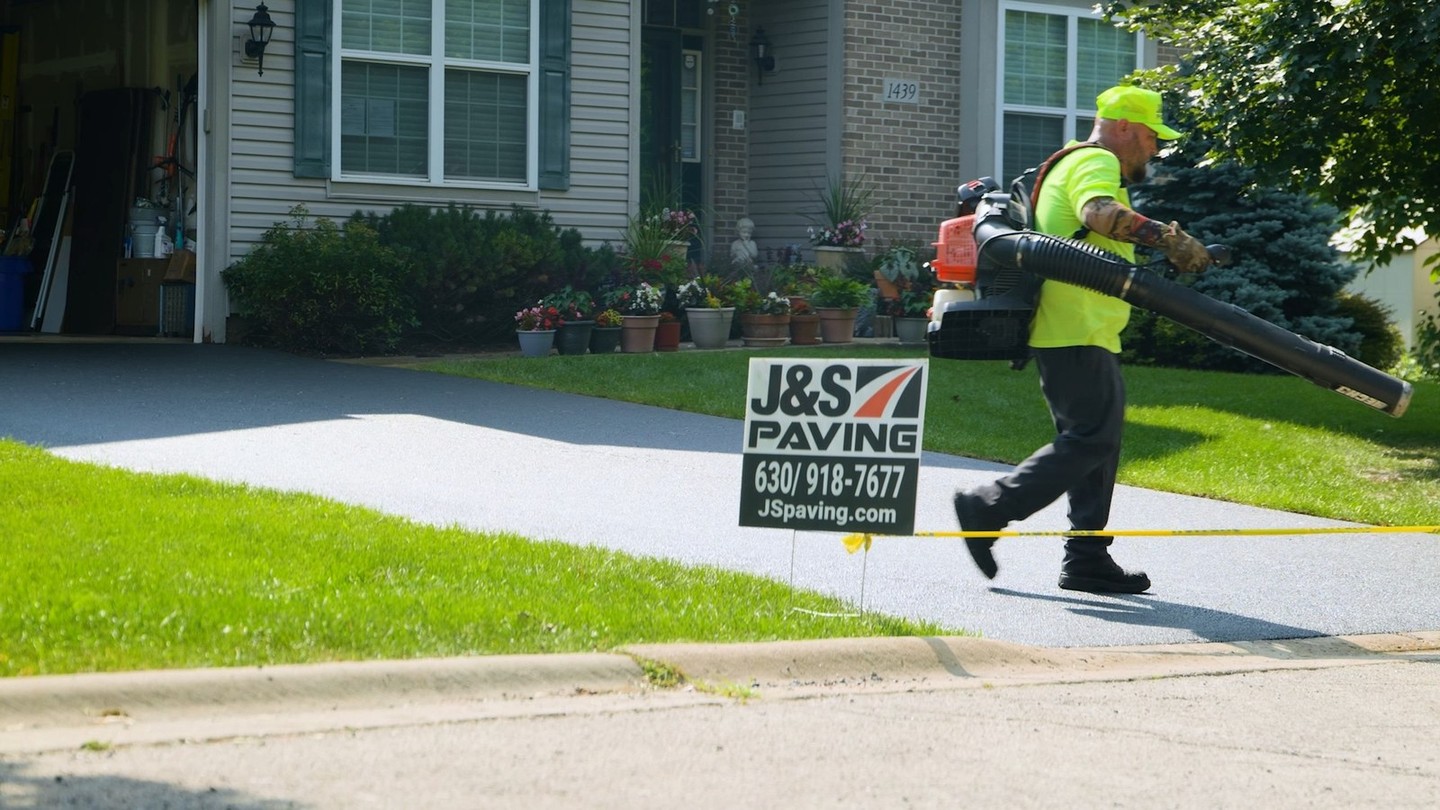
Why Plows and Shovels Damage Asphalt
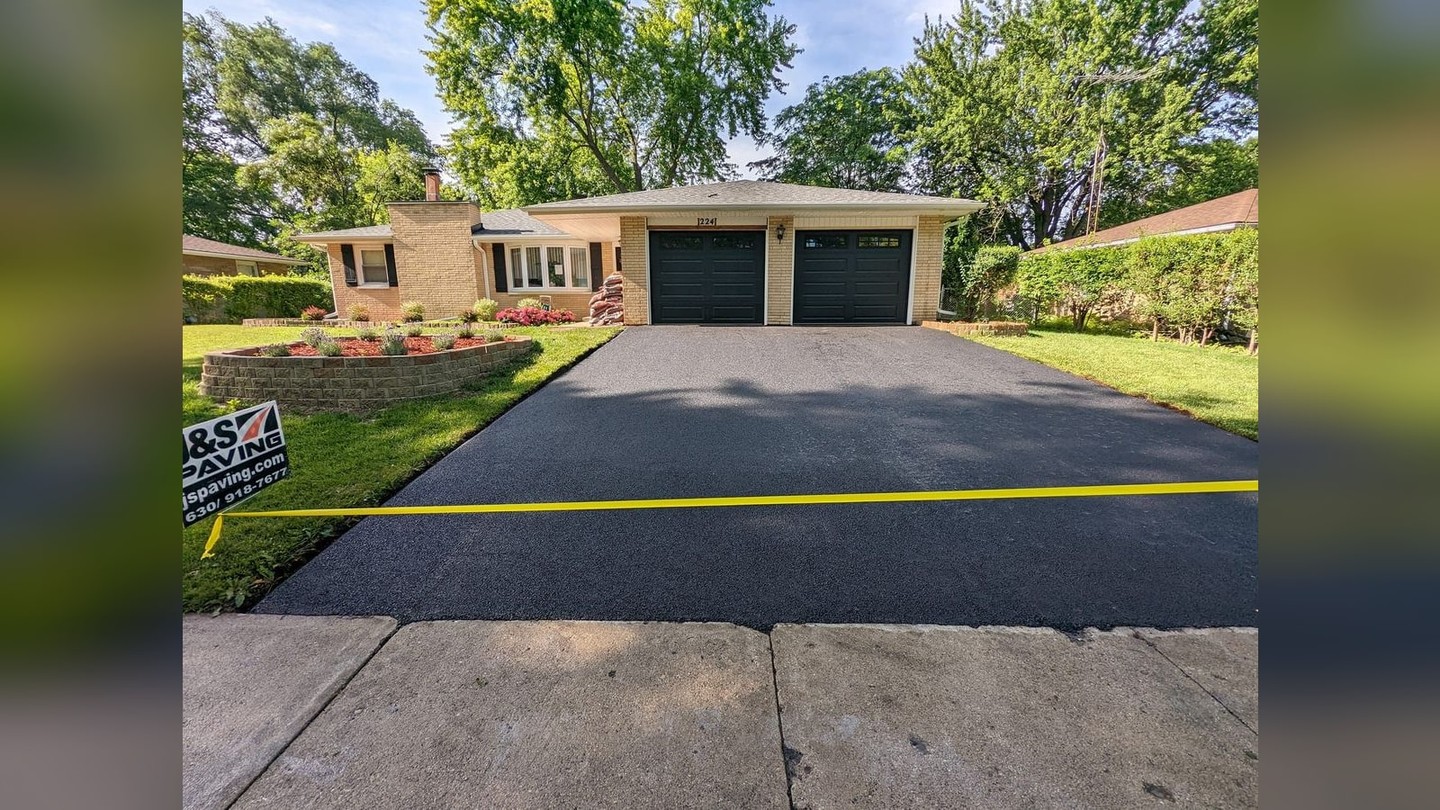
Pavement Interactive lists freeze-thaw cycles, deicing chemicals and as the main sources of winter pavement damage. A steel blade that catches a raised crack or a soft edge can tear loose a chunk of the surface.
Water then gets into the break, freezes and widens it. That's how a small nick becomes one of the driveway cracks worth worrying about by spring.
Mark the Edges Before the Ground Freezes
Driveway markers show a plow driver or snow blower exactly where the pavement stops. Push them in along both sides before the soil freezes, and pick ones tall enough to stay visible above a snowbank.
Edges tend to be the most fragile part of a driveway, and a blade that drops off the side can snap pieces loose.
Use a Shovel That Won't Gouge the Surface
A plastic shovel, or one with a poly or rubber wear strip, is much gentler on asphalt than bare metal. Push snow instead of chopping at it, and let thick ice soften rather than prying at it.
With a snow blower, set the skid shoes so the housing rides slightly above the pavement.
Talk to Your Plow Service Early
Ask your plow driver to keep the blade slightly raised or use a poly cutting edge. Point out the apron, raised cracks and any spots that already chip.
A newer driveway needs extra care because fresh asphalt keeps curing for months. That's why our team recommends waiting at least a year before sealcoating a new driveway.
Time Your Shoveling Around the Street Plow
The Village of Antioch suggests residents to clear curb to curb before finishing the end of the driveway. That way you only clear the heavy ridge it leaves once.
Pile snow in the yard or parkway, never in the street, and keep big piles off the driveway edges.
Go Easy on Salt and Deicers
Pavement Interactive notes that deicers cause less damage at the minimum amount needed, and that acetate products can weaken the bond between asphalt binder and stone. Spread a thin layer, sweep up leftovers and use sand where you only need traction.
Seal and Repair Before Winter Hits
A sealed surface with filled cracks gives a blade less to catch on. Our pre-winter asphalt maintenance tips cover what to finish in the fall, and steady upkeep shapes how long asphalt driveways last.
If a plow already took a bite out of your driveway, our crew can look at it for asphalt repair or other paving services once the season returns.
Frequently Asked Questions
Can a snow plow damage a newly paved driveway?
Yes, a new driveway is more vulnerable because the asphalt is still curing and can scuff more easily. J&S Paving recommends waiting at least a year before sealcoating fresh asphalt.
That makes the first winter the one where markers, a raised plow blade and a plastic shovel matter most. Ask your plow service to take extra care along the edges and apron.
When can plow damage to a driveway be repaired?
Most plow damage has to wait for spring, because asphalt needs warmer weather to be placed and compacted properly. J&S Paving typically paves driveways from April through November, as long as temperatures hold around 40 degrees and rising.
Until then, keep meltwater moving away from the damaged spot so it does not freeze inside the break and make it bigger.
Do crumbling driveway edges mean the whole driveway needs replacing?
Not always, but edges that keep breaking apart are a warning sign worth checking. J&S Paving treats crumbling edges as a sign that the driveway's overall structure may be weakening.
A single damaged corner can often be repaired. When the edges, cracks and low spots add up across the driveway, replacing the asphalt may be the better long-term choice, and a free estimate can tell you which applies.
Is sand better than salt for an asphalt driveway?
Sand is gentler on the pavement itself, but it only adds traction and does not melt ice. Pavement Interactive notes that sand does not chemically attack pavement materials, though it also does not wash away and has to be swept up later.
Many homeowners use a light layer of deicer to loosen ice and a little sand on top for grip.
What should I check on my driveway after the snow melts?
Walk the driveway in early spring and look for gouges, loose chips along the edges, new cracks and spots where water pools. J&S Paving lists pooling water, crumbling edges and deep cracks as signs a driveway may need professional paving rather than another patch.
If you spot any of these, call J&S Paving at (630) 918-7677 for a free estimate.
Request a Free Driveway Estimate
Markers, the right shovel and a light hand with salt are the simplest ways to protect an asphalt driveway from snow plow damage.
If winter already left its mark, our family-owned asphalt team in Carol Stream, IL, can help you plan spring repairs. Call J&S Paving today at (630) 918-7677 or request a free estimate online.
