Oil-Based vs. Water-Based Sealer: Which Is Better for Your Driveway?
Both types of sealer protect asphalt, but they go on, cure and wear differently. The right pick depends on your driveway's age, its condition and what you want from the finish.
As a family-owned asphalt paving company in Carol Stream, IL, we apply both kinds of asphalt sealcoating, so here is how they compare.
What Sealer Does for an Asphalt Driveway
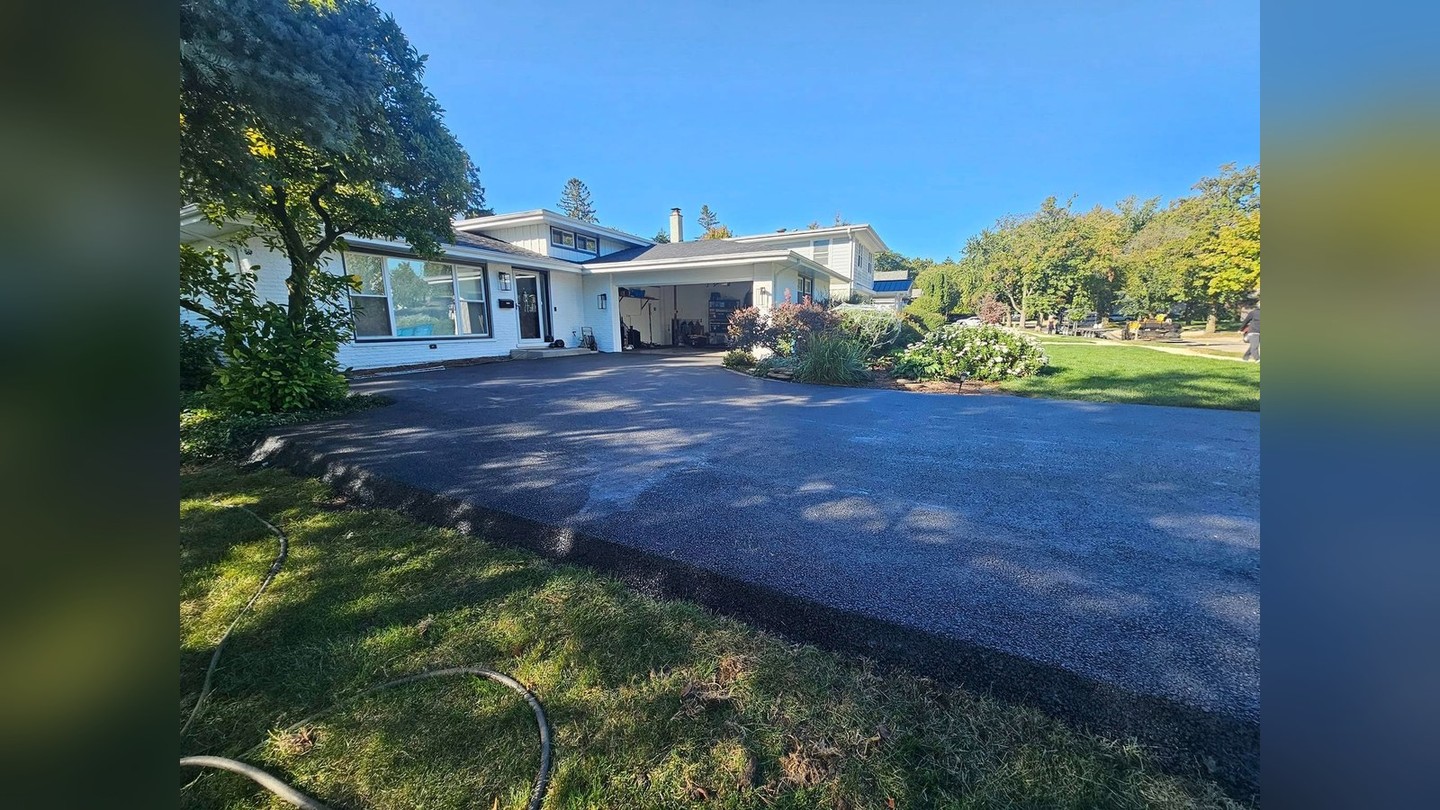
A sealcoat is a thin layer that blocks sun, water, oil and chemicals from breaking down the asphalt binder. It also gives a faded gray driveway its dark, even color back and makes small spills easier to clean.
Sealer is maintenance, not a repair. Our post on when driveway cracks are a problem explains which damage needs more than a fresh coat.
How Oil-Based Sealer Works
Oil-based sealers are petroleum products that soak into the surface instead of sitting on top. A home publication describes them as that can help with cracking from temperature swings.
The tradeoffs are a longer cure and a strong smell that may hang around for a few days. These products also contain VOCs, and leftover material has to go to a hazardous waste site.
How Water-Based Sealer Works
Water-based sealers are emulsions, meaning the sealing material is suspended in water. They form a protective film on the surface rather than penetrating deeply.
They tend to cure faster with less odor, which suits a household that needs the garage back quickly.
Because they are less flexible, they may need reapplying a little more often than an oil-based coat.
Ask What Is Actually in the Bucket
"Water-based" does not tell you what the solids are. Most sealcoat products are either coal-tar or asphalt emulsions, according to the .
USGS reports that coal-tar sealcoat carries roughly 1,000 times more PAHs than asphalt-based products. It also found those particles can end up in house dust, which matters most for small children.
Timing Counts With Either Type
Sealer needs warm, dry weather to cure and bond. Our crew schedules sealing between late spring and early fall, once days and nights both hold above 50 degrees.
A brand-new driveway should cure for about a year before its first coat. If yours was just paved, our guide on driving on new asphalt covers those early months.
Which One Fits Your Driveway?
An older, dried-out surface may benefit from a sealer that soaks in. A driveway in good shape, or a family that wants less odor and a quicker return to the garage, may lean toward a water-based product.
Our crew looks at the pavement first and then recommends one. Regular sealing is also one of the simplest ways to stretch how long asphalt driveways last, alongside the rest of our paving services.
Frequently Asked Questions
Does water-based sealer ever contain coal tar?
Yes, some water-based sealers are coal-tar emulsions, while others are asphalt emulsions. The label or the company applying it should be able to tell you which one you are getting.
Connecticut's advises homeowners to choose asphalt-based products over coal-tar sealants for driveways. Asking before work starts takes a minute and settles the question.
Why does sealcoat wear thin on a driveway?
Car tires and snow plows grind the coating down a little at a time, while sun and water keep working on the surface. Even a good coat thins out over a few seasons.
The U.S. Geological Survey names the abrasive action of tires and plows as the reason sealcoat wears off. Driveways that get plowed all winter may show it sooner.
How often should a sealed driveway be resealed?
Most residential driveways do well with a fresh coat every 2 to 3 years. That pace keeps the surface protected without building up thick layers that can peel.
Heavy use, full sun or lots of plowing can shorten that window. J&S Paving can look at the surface and tell you whether it is due now or can wait another season.
Can sealcoating fix a cracked driveway?
No, sealer protects sound asphalt but does not repair structural damage. Small, stable cracks are usually filled first, and then the coat goes on over the whole surface.
Alligator cracking, sinking spots or a failing base need patching down to the base or replacement of that section. J&S Paving checks for those problems before recommending a sealer.
Does J&S Paving seal parking lots as well as driveways?
Yes, the same crew handles asphalt sealcoating for business owners and property managers. Commercial lots get the same choice between oil-based and water-based sealer, based on the condition and age of the pavement.
Driveways remain the main focus of the company, which has served homeowners across the western suburbs since 1992. Call J&S Paving at (630) 918-7677 to talk through either kind of project.
Get a Sealcoating Estimate
Not sure which sealer suits your driveway? Our Carol Stream, IL asphalt paving company will look it over and recommend the right fit.
Call J&S Paving today at (630) 918-7677 or request a free estimate online.
