
Asphalt vs. Concrete Driveways: Which Holds Up Better in Illinois Winters?
Both surfaces can work in a cold climate, but they fail in different ways once snow, salt and freeze-thaw cycles show up. Before you commit to new driveway paving, it helps to know how each one reacts to a Chicago-area winter.
Our family-owned asphalt crew in Carol Stream, IL works with this material every day, so here is the honest comparison.
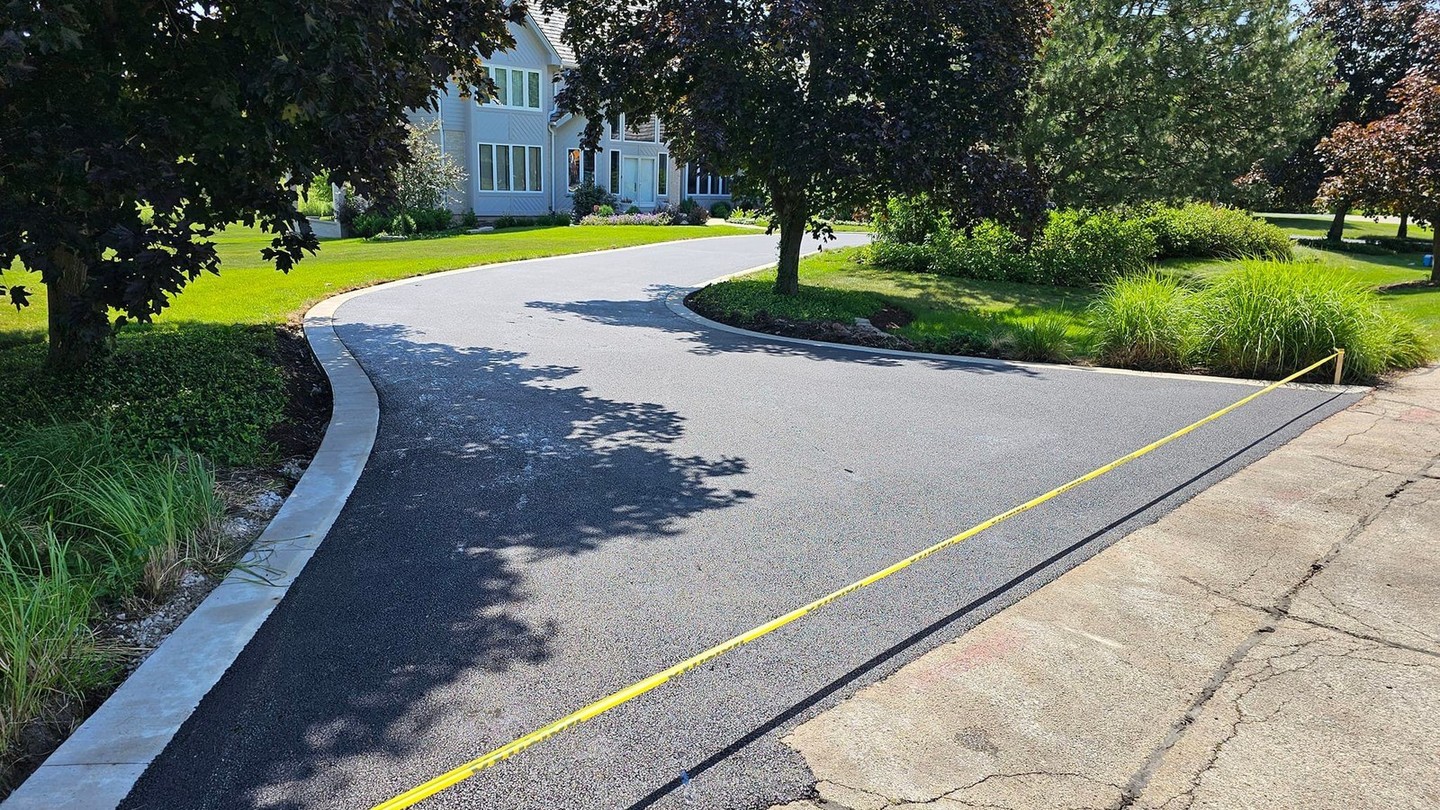
What Winter Actually Does to a Driveway
Illinois winters swing above and below freezing again and again. Water seeps into the surface, freezes, expands and thaws, and every cycle puts a little more stress on the pavement.
Add road salt tracked in by your car and the driveway takes a beating from November through March. The question is which material shrugs that off better and which one is easier to fix when it doesn't.
How Concrete Handles Freeze-Thaw and Salt
Concrete is rigid and strong, but its surface is vulnerable to scaling. Scaling is flaking or peeling of the top layer after repeated freezing and thawing, according to the .
The same group says deicing chemicals make scaling worse because they keep the surface wetter and add more freeze cycles. It advises skipping deicers during a slab's first winter altogether.
Salt type matters too. A describes damage linked to magnesium chloride and calcium chloride brines, the same products many cities spread on roads.
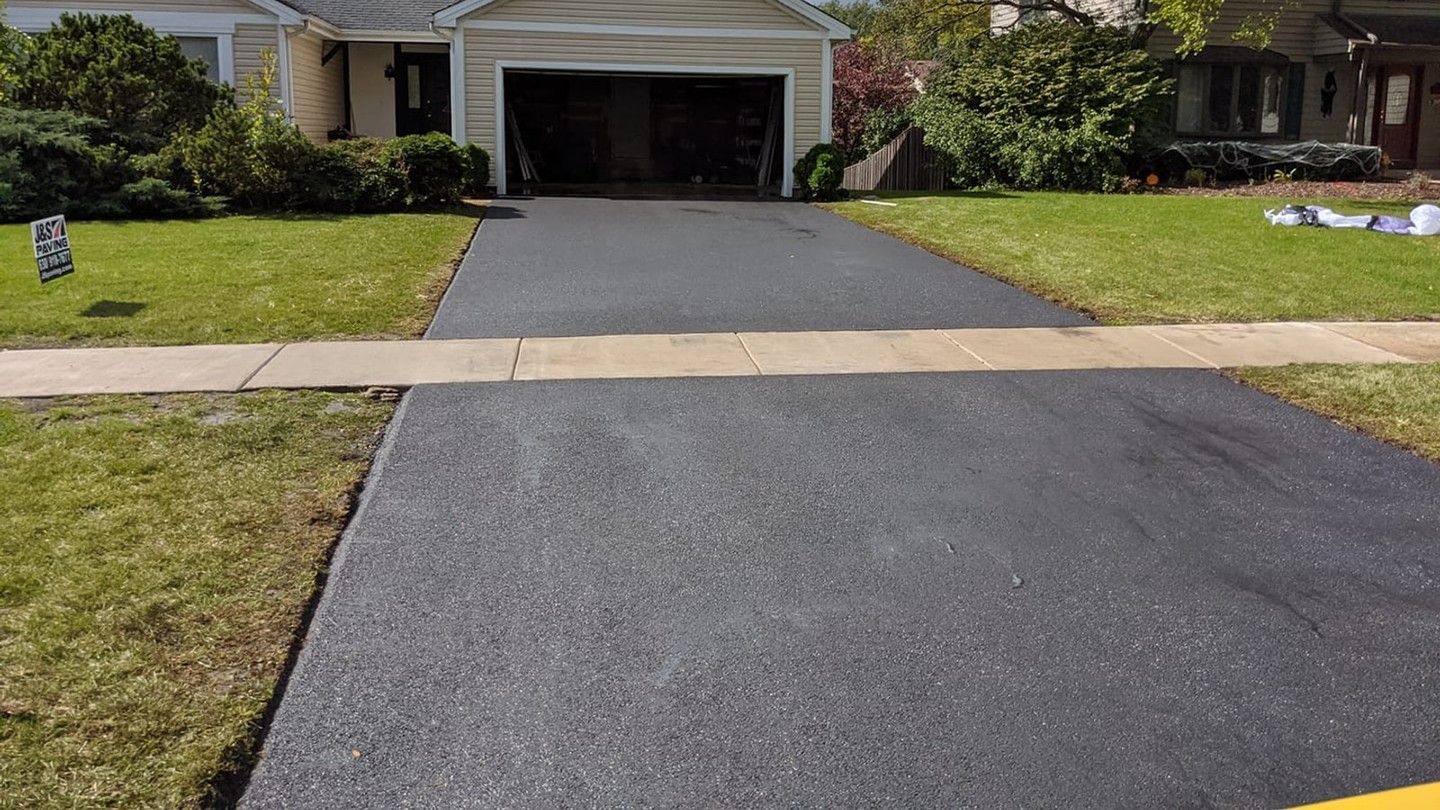
How Asphalt Handles the Same Conditions
Asphalt is a flexible pavement, so it moves a little with the ground instead of holding rigid. Cold weather still affects it, and water that gets under the surface can lead to cracks and potholes.
The difference is that salt scaling isn't a typical asphalt problem. The bigger winter threat is water getting through cracks into the base below.
Repairs Are Where Asphalt Pulls Ahead
When concrete scales, the NRMCA notes that repair material will not match the color of the original slab. A patched concrete driveway usually looks patched.
Asphalt cracks can be sealed and damaged areas repaired with matching material. Our post on when driveway cracks become a problem covers which ones need attention before winter does more harm.
Base Work Matters More Than the Surface
Neither material survives a poor base. Standing water and soft spots under the pavement will crack asphalt and concrete alike.
That is why our crew grades for drainage and builds a compacted base before any asphalt goes down. If you are unsure whether an older surface can be saved, read our guide on driveway repair or replacement.
Which One Fits Your Home?
If you want a surface that tolerates salt and is simple to repair, asphalt is a strong fit for northern Illinois. Concrete can last, too, as long as it is mixed and cured well and treated gently with deicers.
Not sure your current driveway is ready for replacement? These signs your driveway needs paving are a good place to start, along with our full list of paving services.
Frequently Asked Questions
Can I use rock salt on a brand-new concrete driveway?
It is best to avoid deicers on new concrete during its first winter. Fresh concrete tends to hold more water and has not reached full strength, so salt raises the risk of scaling.
The National Ready Mixed Concrete Association suggests clean sand for traction that first season, then moderate amounts of deicer in later winters.
Which ice melts are hardest on concrete?
Magnesium-based products and ammonium sulfate or ammonium nitrate are the ones to avoid on concrete. They are chemically aggressive and can break down the surface.
Federal highway research has also flagged strong magnesium chloride and calcium chloride brines. Sodium chloride, or rock salt, used in moderate amounts is generally considered acceptable.
Can a worn concrete driveway be replaced with asphalt?
Yes, a failing concrete driveway can usually be removed and replaced with asphalt. J&S Paving handles the full job, from demolition of the old material to grading for drainage and laying fresh asphalt.
Our team evaluates your property first and walks you through each step, so you know what to expect before any equipment arrives.
When should a new asphalt driveway get its first sealcoat?
Wait at least a year before sealcoating new asphalt, depending on weather and the mix. Fresh asphalt needs that time to cure, and sealing too early can interfere with the process.
J&S Paving applies sealcoat in late spring through early fall, when temperatures stay above 50 degrees during the day and overnight. That window helps the coating cure and bond.
Does J&S Paving work outside Carol Stream?
Yes, J&S Paving serves homeowners across the western and northwest suburbs, not just Carol Stream. Our service area includes Wheaton, Glen Ellyn, Bloomingdale, West Chicago, Naperville and Schaumburg, among other nearby towns.
If you are comparing driveway options anywhere in the area, give us a call at (630) 918-7677 and we can talk through your project.
Request a Free Driveway Estimate
Thinking about trading a scaled concrete slab for fresh asphalt? Our Carol Stream, IL driveway paving team would be glad to come out and take a look.
Call J&S Paving today at (630) 918-7677 or request a free estimate online.
